
- The company’s Trebnick brand pioneered the use of high-density polyethylene (HDPE) for tagging solutions more than four decades ago and continues a culture of science-based innovation to this day.
- IDENTCO’s industry-leading portfolio of custom polyimide (PI), polyester (PET) and polypropylene (BOPP) materials serve the precise needs of electronics, automotive and industrial customers worldwide.
- Reliance offers BS 5609 compliant vinyl and PET solutions that transform GHS compliance performance for the chemical, petrochemical and hazardous materials industries
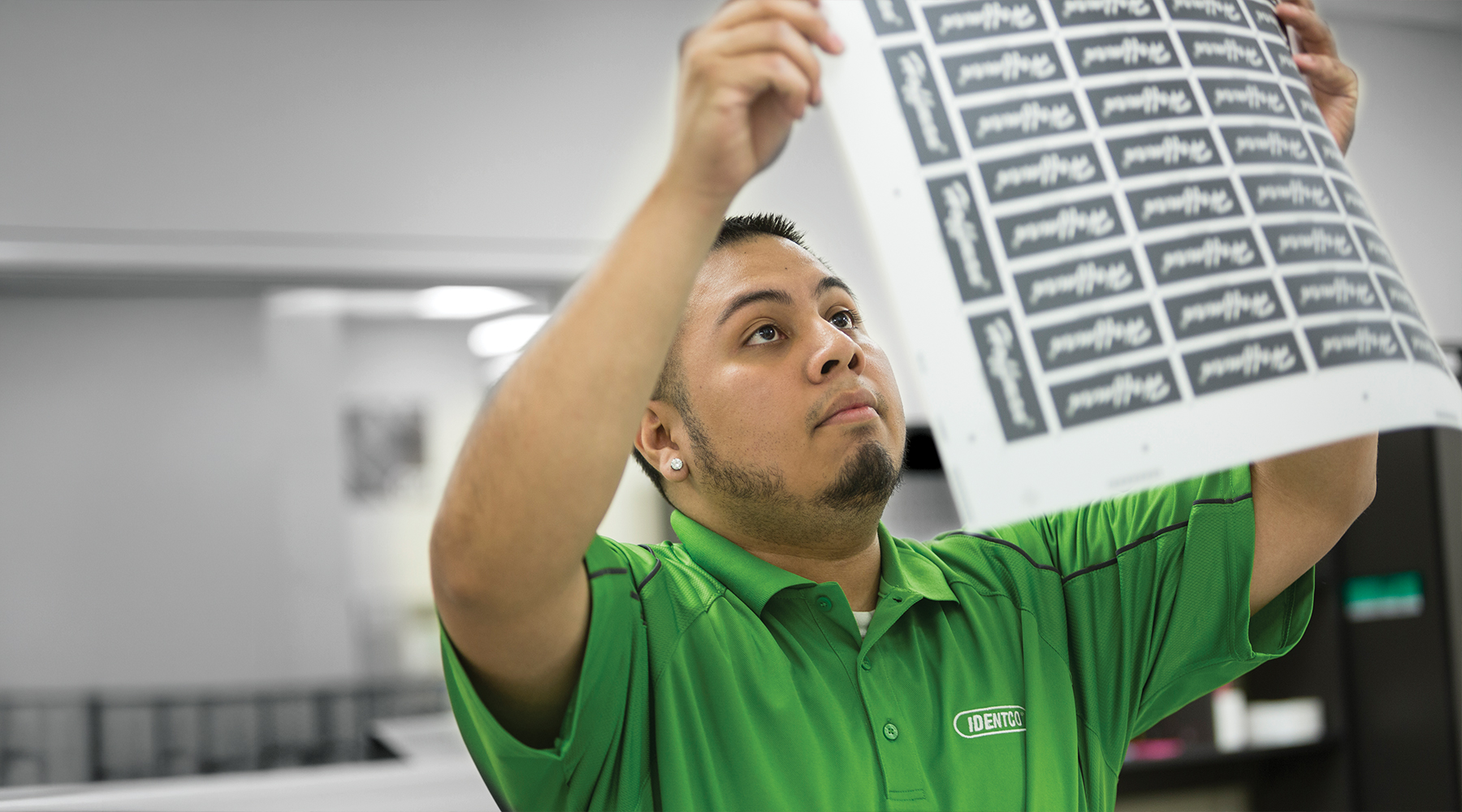
Choosing a provider with deep knowledge of materials science and on-site lab testing capabilities is invaluable. Using engineering expertise to create solutions that use the right combination of facestock, adhesive, coating and printing technology is key to ensuring long-term compliance even in the harshest operating environments.
Why Lab Testing is Critical
Testing in a controlled lab environment allows manufacturers to validate real-world performance before labels ever reach production.
Our advanced on-site Innovation Lab supports product development, rigorous testing, quality control and customized solution engineering. The lab allows our team to investigate and engineer new technologies, materials or processes that produce greater returns that accelerate business impact.
A failing label creates serious compliance risks in industrial environments. When labels become unreadable or degraded, companies can quickly fall out of compliance with industry regulations and internal quality standards. That’s why testing is a critical part of the label development process. While a material may appear suitable, real-world operating conditions often expose vulnerabilities that can lead to failure.

Common Testing Methods
Armis customers gain access to a comprehensive suite of performance tests, all conducted by our team of experts in-house.
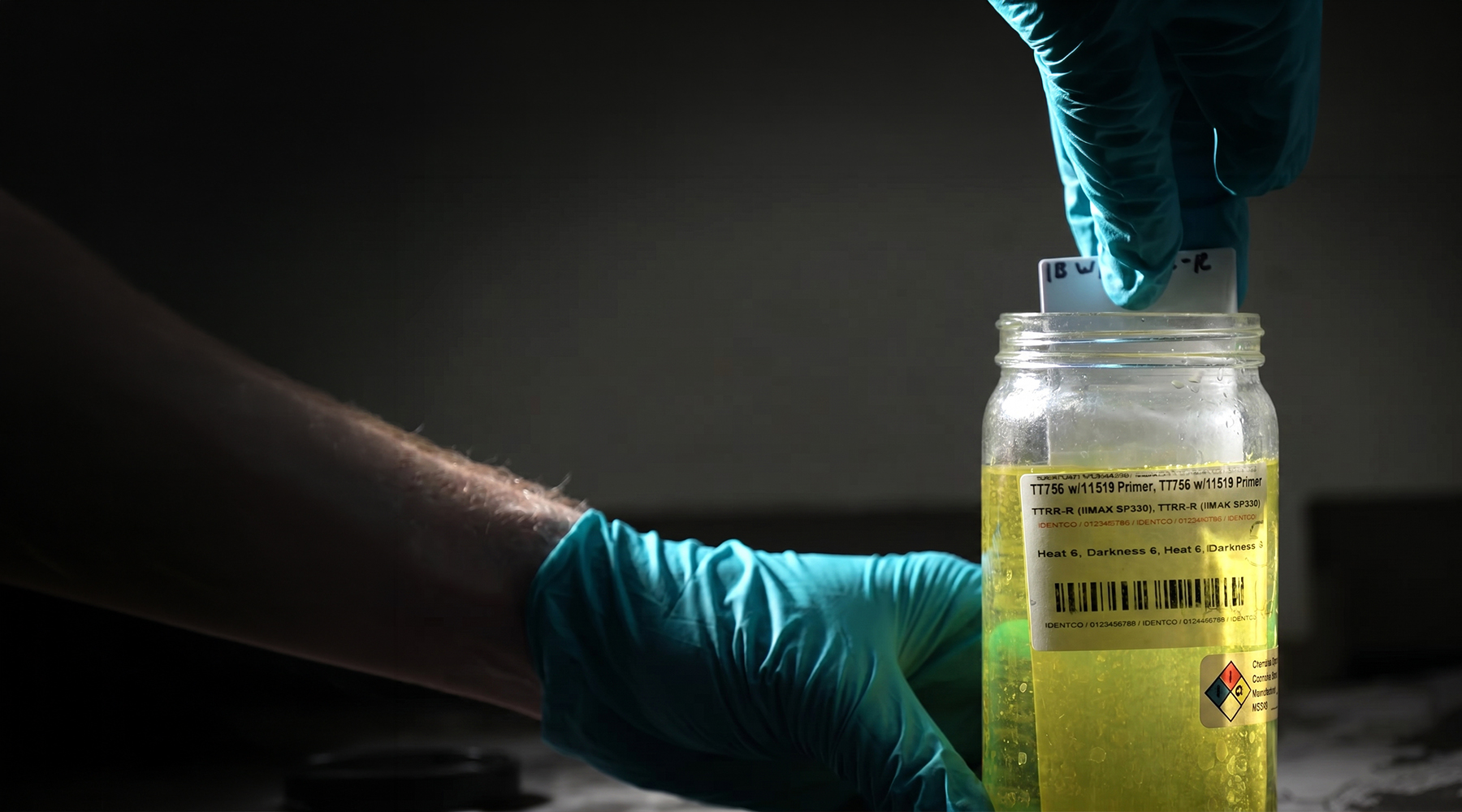
- Chemical resistance testing evaluates how pressure-sensitive materials and printing inks withstand exposure to aggressive substances.
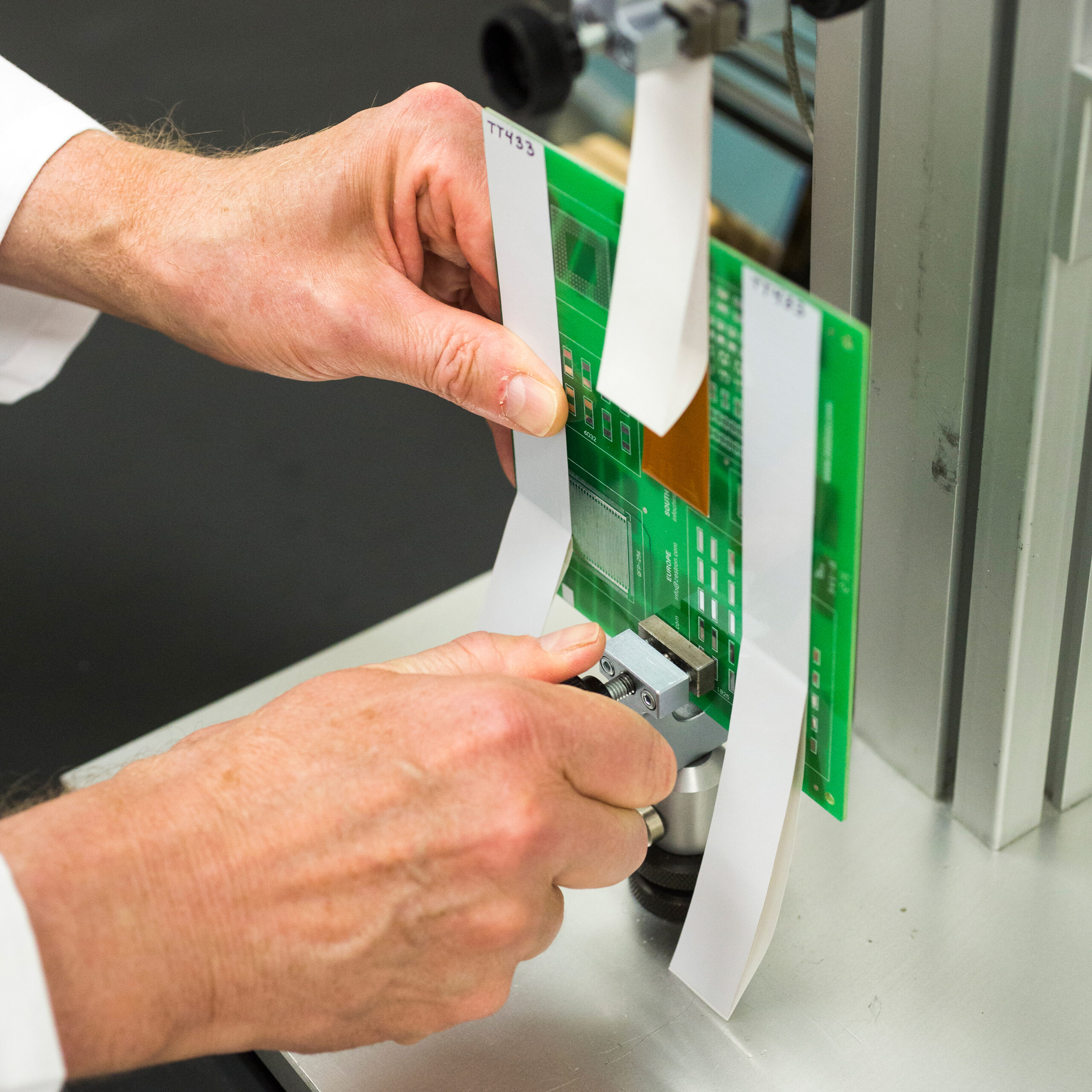
- Peel adhesion testing determines the amount of force required to remove a label from a specific substrate at a 180-degree angle.
- Accelerated UV exposure testing assesses durability by placing labels inside xenon arc chambers that emulate years of sunlight exposure in compressed timeframes.
- Abrasion resistance is tested using weighted abrasive wheels that repeatedly rub label surfaces to simulate wear from handling, friction and industrial use.
- Temperature cycling chambers expose labels to both sustained and fluctuating temperatures.
- Water immersion tests label endurance during prolonged submersion. Our BS5609 certified labels can withstand several months of exposure to salt water.
- Barcode/QR quality verification, also known as ISO/ANSI grading, uses specialized verification hardware to measure a symbol’s physical print quality.
Together, these testing protocols help validate durable labels that are not only designed for extreme environments but proven to perform in them. Without testing and validation, labels can fail.
Engineered to Withstand Every Environment
The effectiveness of a custom durable label depends on selecting the right combination of overlaminate, topcoat, facestock, adhesive, material and release liner for the intended environment.
Determining the right components begins with an evaluation of the label’s real-world environment and performance requirements. Materials science experts assess factors such as surface type, temperature exposure, chemical contact, UV exposure, abrasion, moisture, outdoor durability and expected product lifespan to design the best construction for long-term performance.
Labels must maintain readability and structural integrity under harsh conditions. They must bond securely to the specific substrate throughout the product lifecycle without peeling, lifting or degrading. Variables such as textured versus smooth surfaces, low- versus high-surface-energy materials and application methods also influence material selection.
No matter what your application is, Armis leverages decades of experience to create tailored products. If a current label or tag design doesn’t meet your unique specifications, the Armis team can customize new solutions built to last.
Our Approach to Testing Adds Value
Label testing ensures every solution performs reliably in critical environments. Through rigorous quality control and assurance processes, potential defects and performance issues can be identified early, allowing corrective action before products ever reach the field. Armis’ testing and lab capabilities also enable customized durable label solutions engineered to meet unique application requirements and environmental conditions.
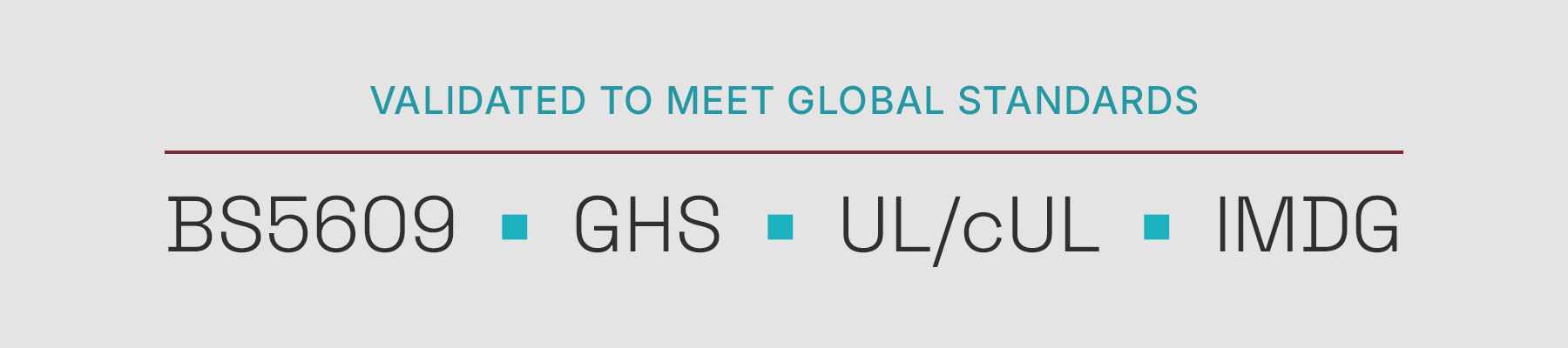
Beyond product performance, customers gain access to deep technical expertise and hands-on support, including material analysis and application guidance that help ensure long-term outcomes. Testing also plays a critical role in validating compliance with standards such as BS5609, GHS, UL/cUL and IMDG, helping customers reduce regulatory risk while maintaining critical traceability throughout the product lifecycle. The result is greater operational confidence, improved efficiency and labeling systems designed to protect both business continuity and brand integrity.
Armis doesn’t “just test” labels. Our robust testing capabilities coupled with decades of expertise in material science allow us to customize solutions guaranteed to withstand the harshest industrial environments.