
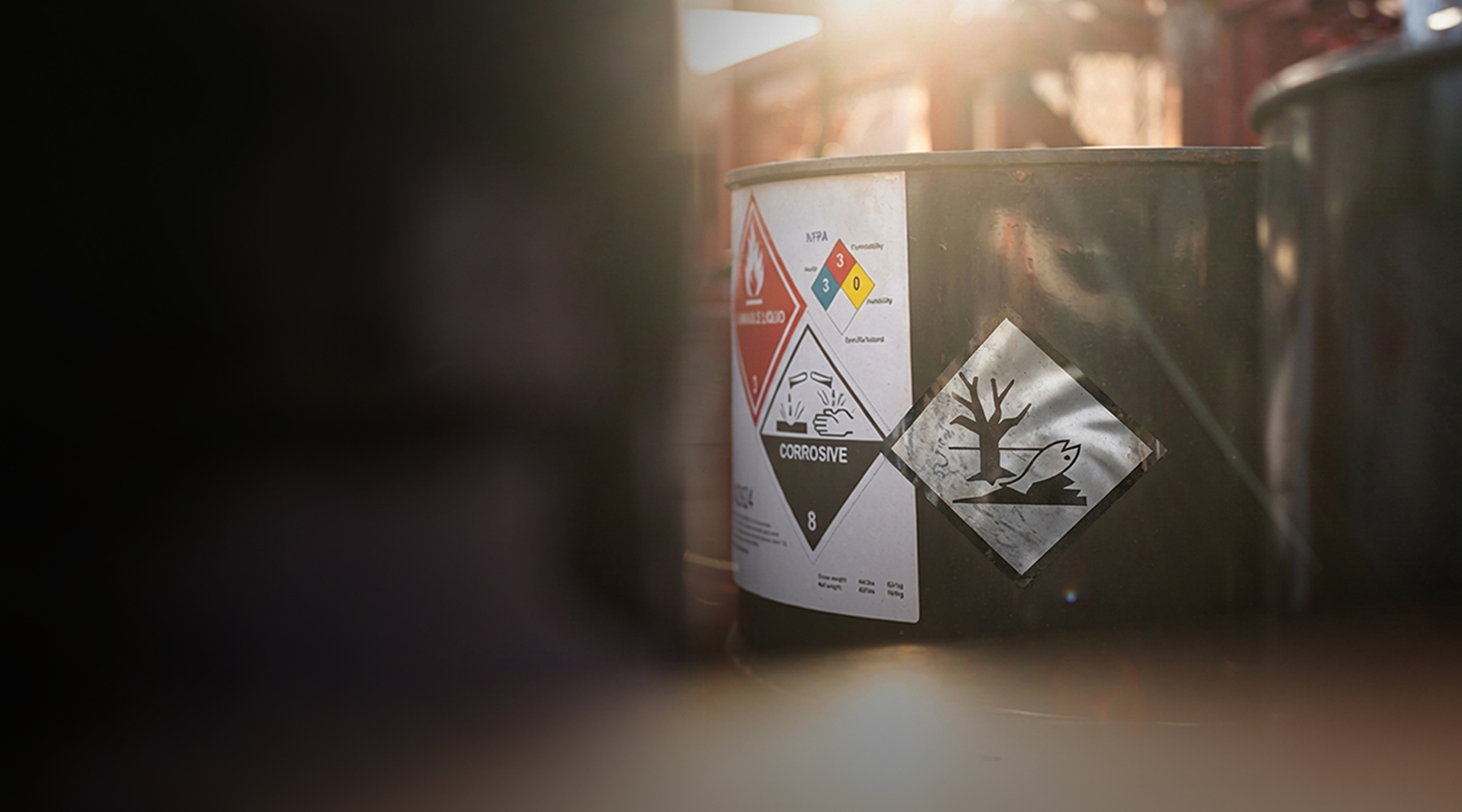
In a globally regulated chemical market, label durability equals risk mitigation. From filling lines to ocean freight, specialty chemical labels face continuous environmental and chemical stress. They must adhere to HDPE and recycled drums, resist solvents and abrasion, and remain legible through UV exposure, temperature extremes and saltwater spray.
Label failure carries significant consequences for today’s manufacturers, including non-compliance penalties, shipment delays, recalls and reputational damage. To operate safely and competitively, manufacturers must treat label durability as a compliance strategy – not a packaging afterthought.
Know What Regulations Apply
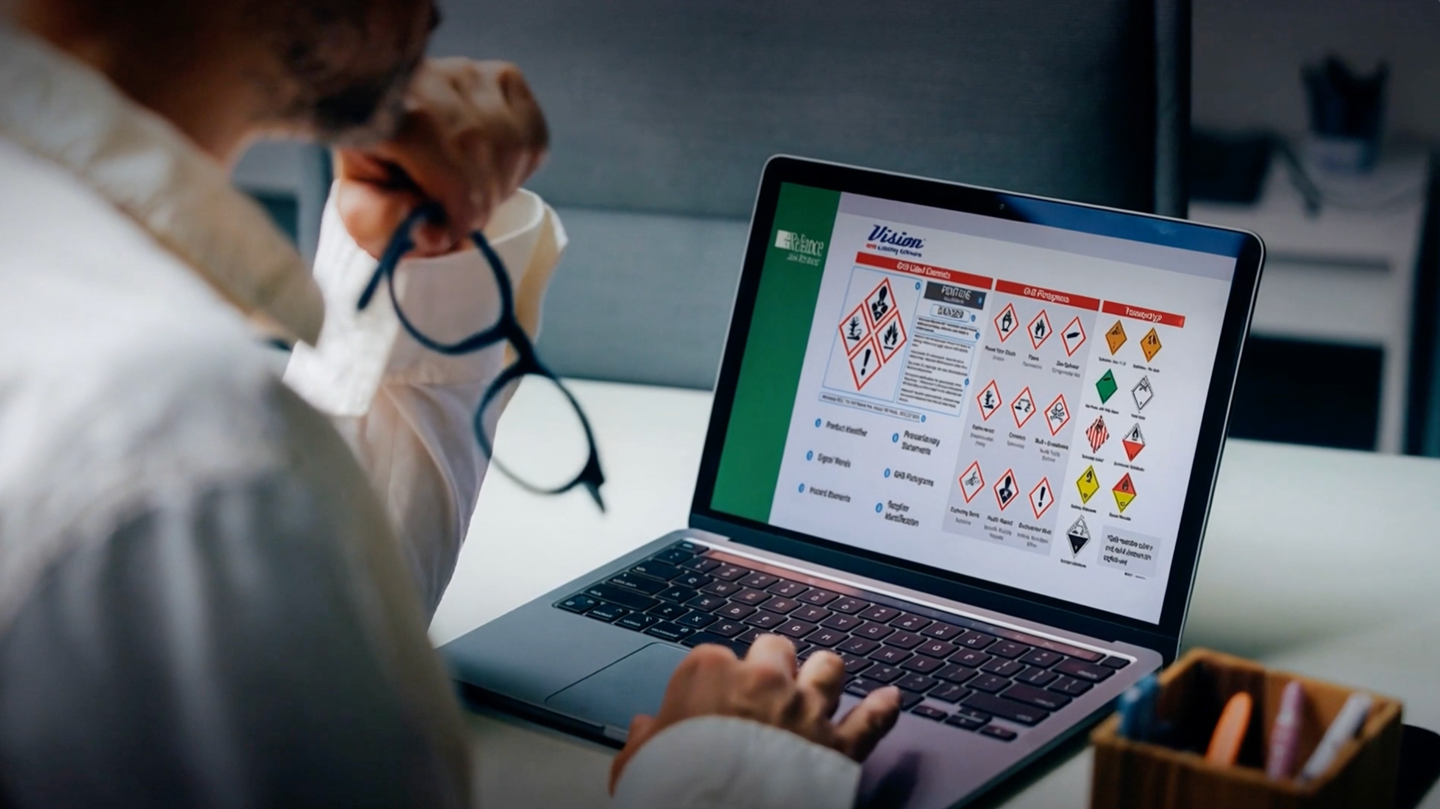
International regulations are in place to standardize chemical labeling, ensure clear hazard communication and safeguard products across global markets. For manufacturers, compliance is foundational to uninterrupted operations.
However, regulatory requirements vary based on transportation method, destination country and shipment mode. What satisfies domestic ground transport may not meet maritime requirements. To remain compliant, manufacturers must understand which standards apply at every stage of distribution.
- GHS: Globally Harmonized System of Classification and Labeling of Chemicals. Standardizes chemical hazard communication labels to provide consistent hazard classification and labeling. Required for all specialty chemical labels.
- IMDG: International Maritime Dangerous Goods. Sets requirements for classification, packaging, labeling, marking, documentation and stowage of dangerous goods during ocean transport. Applies to all hazardous substances with marine shipment.
- BS 5609: British Standard that specifies durability requirements for labels applied to marine chemical containers. Passing BS 5609 Section 2 & 3 proves labels will survive marine conditions and meet IMDG standards.
- DOT: Department of Transportation. Standardizes the shipment of hazardous materials via truck, rail and air. Applies to all hazardous substances transported over land in the United States.
Choose the Right Chemical Label
Every label component works together to create strong durability that outlasts the harshest labeling conditions. Adhesive, facestock, ink, ribbon, printer settings and application method all play a critical role in long-term performance. If one element fails, you risk fading, ink smears, peeling, tears or application issues that compromise regulatory compliance.
For standards such as BS 5609, performance is evaluated as a complete system. All materials must be certified including the label construction, inks and toners, thermal transfer ribbons and printers. Selecting the right chemical labels requires more than material specification. It demands a validated, performance-driven approach that ensures every component works together to protect safety, compliance and operational continuity.
- Facestocks: Specialty formulated materials that withstand harsh chemical exposure and abrasion in manufacturing and transportation environments.
- Printing: Pairs with facestocks to ensure label readability. Inks, toners or ribbons used must have high chemical, abrasion and saltwater resistance with strong substrate bonding, whether your preferred printing method is thermal transfer, inkjet or laser.
- Adhesives: Different materials and container sizes require unique adhesive qualities. Understanding the size, material and condition of the container will impact adhesive selection.
- Precision Machining: Accurate die cuts safeguard quality and the longevity of both hand- and auto-applied labels.
Put Durability to the Test
At Armis, our labels undergo rigorous testing protocols designed to validate long-term performance in real-world applications. Accelerated laboratory testing replicates harsh environmental conditions, compressing years of exposure into controlled timelines to deliver proven, reliable solutions – smarter and faster. The most critical tests for Specialty Chemical applications include the following.

| Test | What It Is | What It Tells Us | The Result |
|---|---|---|---|
| Salt Water Immersion | Submersion of labels in saltwater for 90+ days. | Confirms if labels can withstand prolonged exposure to saltwater. Essential for products with maritime transit. | Label passes Section 2 of BS 5609 requirements for maritime transportation. This is one of two testing requirements for BS 5609. |
| Taber Abrasion | Rotating platform with abrasive wheels applies controlled wear to a label’s surface. | Simulates long-term wear to determine visual degradation and loss of legibility. | Label passes Section 3 of BS 5609 requirements for maritime transportation. This is one of two testing requirements for BS 5609. |
| Chemical Wipe | Labels are wiped with harsh chemicals, such as isopropyl alcohol. | Exposes label printing to harsh solvents and cleaners found in your environment to see if print legibility is maintained or if a different, more durable printing method is required. | Label is suited for your chemical manufacturing and filling operations. |
| UV Exposure | An accelerated weather chamber simulates years of outdoor exposure. | Determines if label will shrink, curl, lift, yellow or fade under UV light. | Label can withstand long-term exposure to outdoor environments. |
| Temperature and Humidity Cycling | Test chamber exposes labels to high and low temperatures at varying humidity levels. | Identifies temperature impact on label performance. | Determines appropriate temperature range for label applications. |
Your Compliance Partner
Specialty chemical labels function as risk mitigators, compliance enforcers and protectors of your products, company and customers. In high-stakes environments, resilient labeling is a strategic advantage.

At Armis, our technical experts stay at the forefront of evolving industry regulations to help manufacturers remain compliant in today’s complex, global markets. Backed by deep materials science expertise and real-world troubleshooting capabilities, we engineer label solutions that set the standard for specialty chemical label performance.