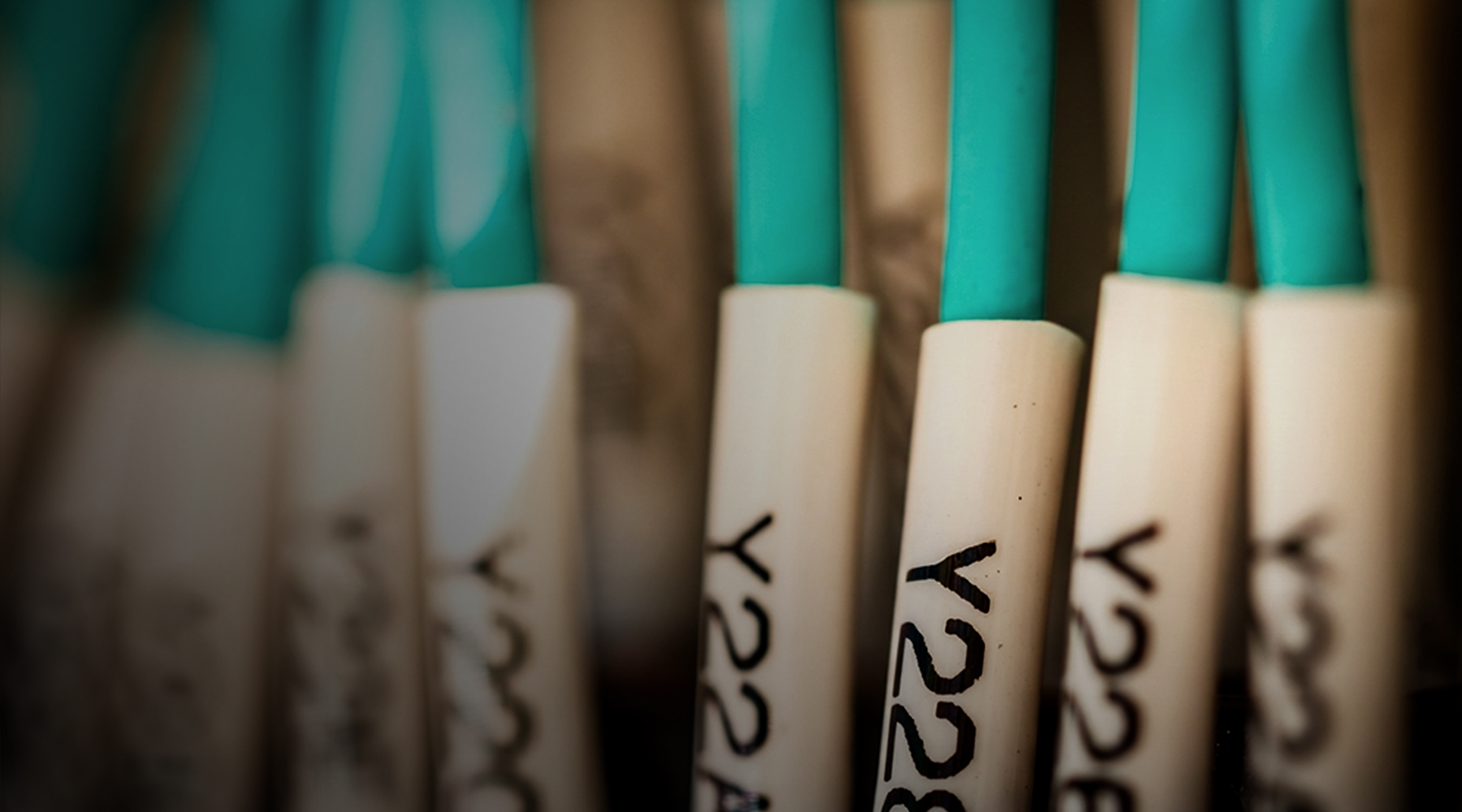
As the world becomes increasingly “wireless,” cable systems aren’t getting simpler. In fact, they’re becoming more interconnected, more dense and more difficult to manage.
At Armis, we’re seeing this shift accelerate across industries – from data centers and manufacturing to transportation and energy. As cable infrastructure expands, so does the operational risk tied to it: misidentified wires, incorrect cable routing, delayed maintenance and unplanned downtime. What was once a manageable back-end detail has become a critical point of failure.
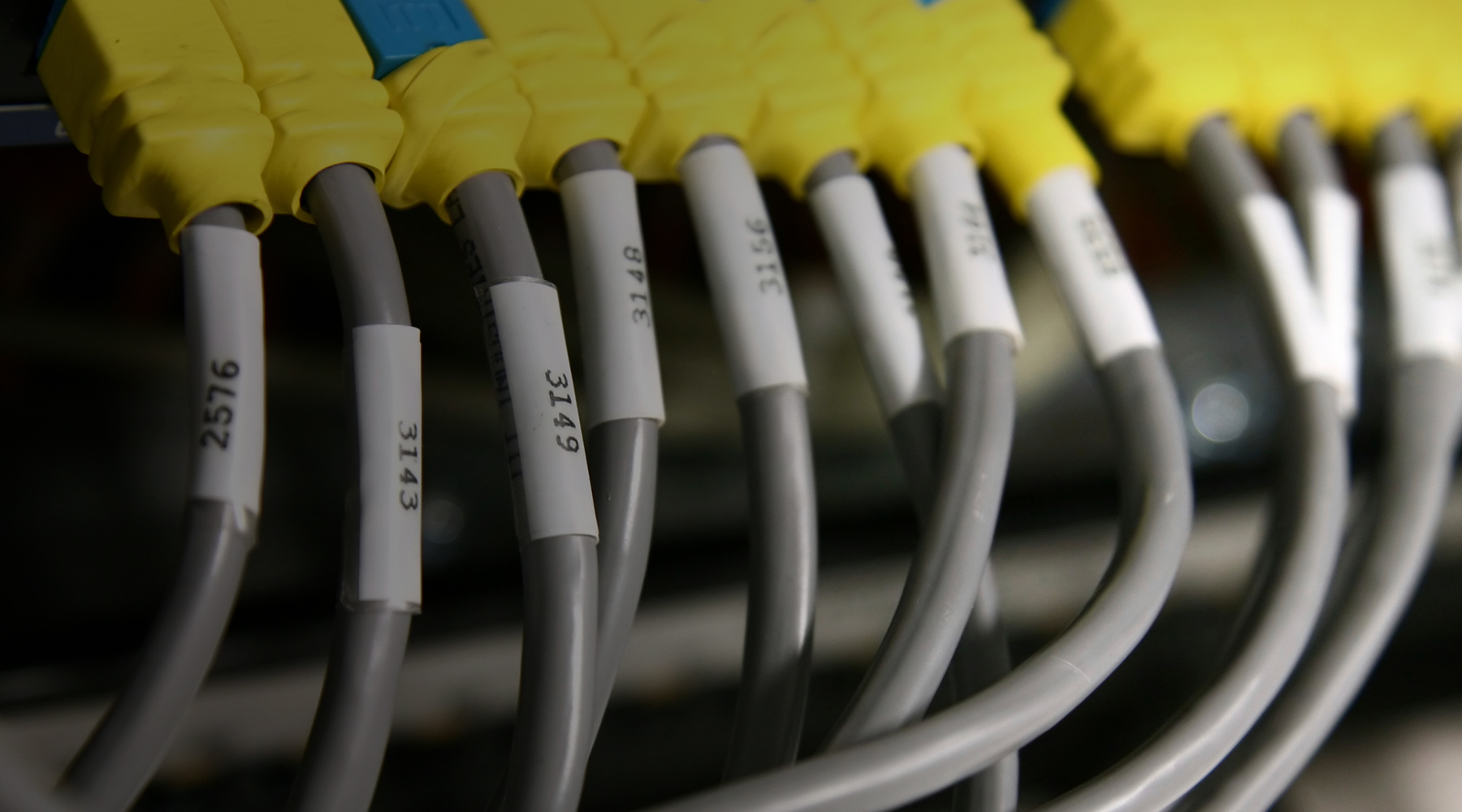
Yet in many organizations, wire and cable identification is still treated as an afterthought. In high-density systems, that oversight can turn a single misidentified cable into extended downtime, safety risks and costly operational delays. We approach this differently, engineering wire and cable identification systems for durability, traceability and long-term performance so they hold up in the environments they operate in and the systems they support.
Engineering for Harsh, Real-World Conditions
One of the most common challenges we see in wire and cable identification is a mismatch between label selection and real-world conditions. Prime labels are built for controlled environments and short lifespans, while the environments cables operate in are anything but.
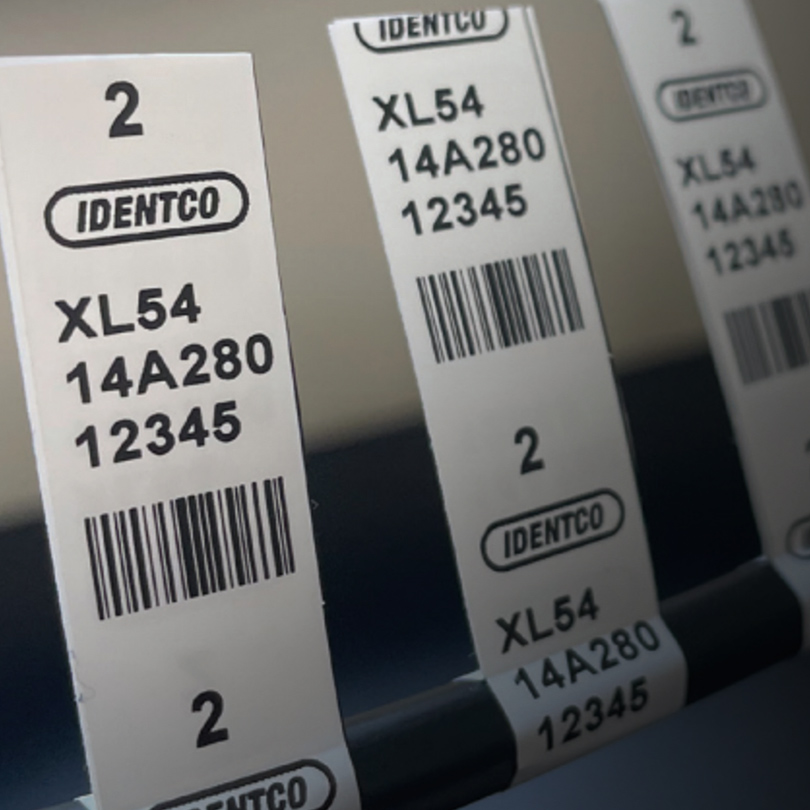
When labels aren’t designed for harsh environments, failure follows. Information becomes unreadable, traceability is lost and risk increases. Armis addresses this by engineering durable label solutions around the conditions they must withstand, ensuring long-term performance and reliability.
| Label Challenge | Harsh Conditions | Durable Material Solution |
|---|---|---|
| Weather | UV Exposure, Moisture, Extreme Temperatures, Wind | Thermal Transfer printing maintains legibility. High-strength acrylic adhesives prevent peeling. Mechanical zip attachment of tags adapts to any surface type |
| Wear | Abrasion, Constant Vibration, Frequent Handling | Overlaminate protects labels from damage. Thermal Transfer printing maintains legibility |
| Chemical Exposure | Harsh Solvents / Cleaners | Thermal Transfer printing resists chemicals. Vinyl, polyester or HDPE facestocks prevent wear |
| Extreme Heat | High Temperatures, Humidity | High-strength acrylic adhesives prevent peeling. Vinyl, polyester or HDPE facestocks resist degradation |
| Unique Surfaces |
Textured Cable Jackets, Low Surface Energy Materials, Curved Surfaces | High-strength acrylic adhesives bond to unique surfaces. Conformable vinyl, polyester or HDPE facestocks maintain adhesion. Mechanical zip attachment of tags adapts to any surface type |
The result is consistent, long-term cable identification – labels that remain legible, adhered and functional throughout the lifecycle of the system.
Strengthening Cable Traceability to Reduce Risk
As systems scale, wire and cable traceability becomes increasingly critical. When identification fails, the impact is immediate: longer troubleshooting times, increased risk of miswiring and avoidable downtime. In high-density environments, even a single misidentified cable can create cascading issues that slow progress and disrupt operations.
Organizations that prioritize clear, durable cable identification avoid these challenges. By ensuring labels are readable and long-lasting, they enable faster troubleshooting, reduce risk and maintain control as system complexity increases.

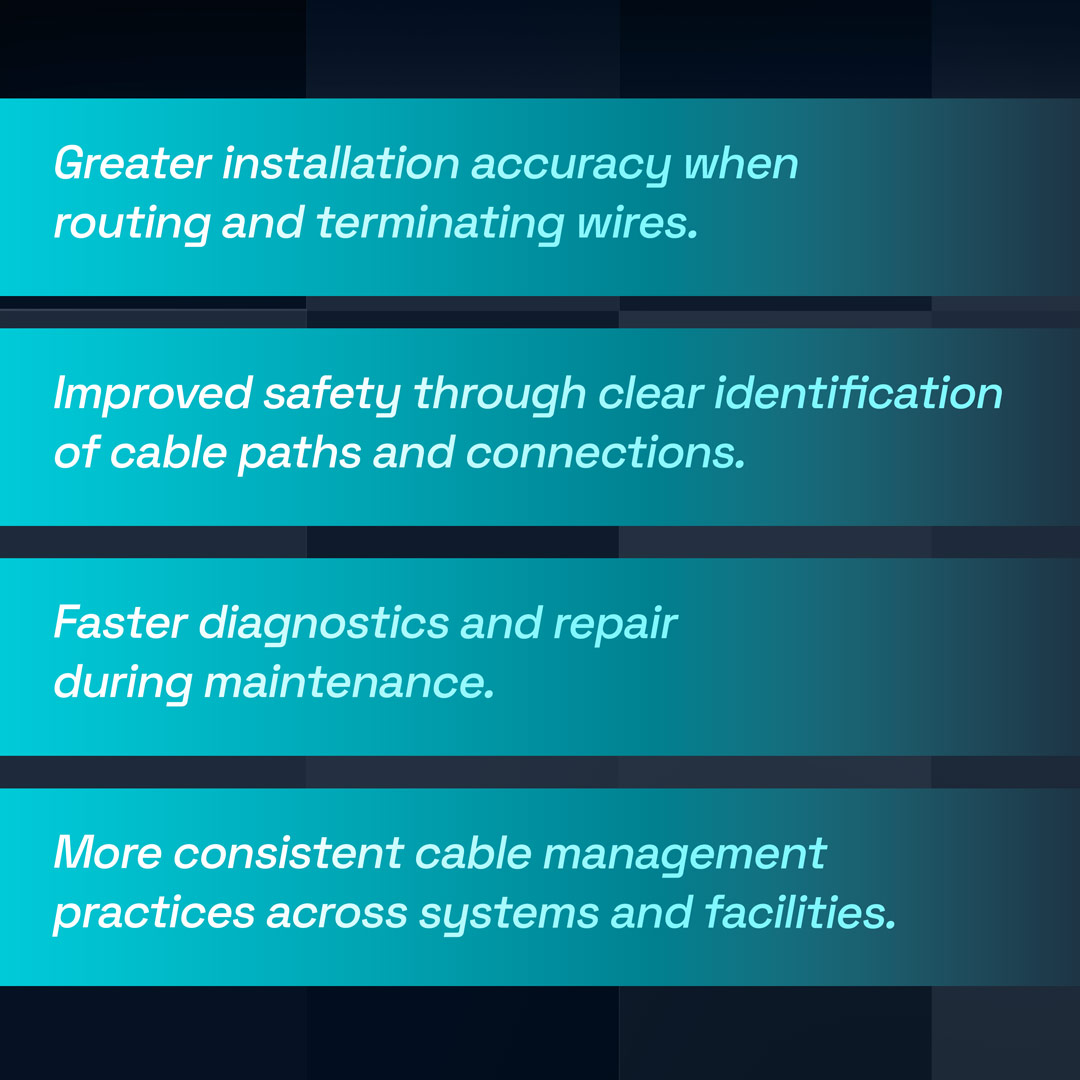
These improvements directly impact uptime, safety and operational efficiency.
Selecting the Right Wire & Cable Approach
Selecting the right labeling format is a critical part of effective wire and cable identification. Wire wrap and flagging labels each serve a specific purpose depending on cable size, environment and information requirements.
Choosing the wrong format, or prioritizing convenience over durability, often leads to long-term performance issues.
| Attributes | Wire Wrap | Flagging | Tags |
|---|---|---|---|
| Style | Self-laminating wire wrap | Semi-rigid flag design | Rigid tag design |
| Ideal Cable Size | Small, tight-diameter or complex wire bundles | Small-, medium- and large-diameter cables | Medium- and large-diameter cables |
| Information Visibility | 360° visibility | Expanded surface area for more data | Sized to fit required viewing distance |
| Abrasion Resistance | Strong | Strong, especially in high-contact environments | Strong |
| Chemical Resistance | Strong | Moderate | Moderate |
| High-Temperature Resistance | -40 to 120° Celsius | -40 to 150° Celsius | Up to 93° Celsius |
No matter the style you choose, durability must be the top priority. At Armis, we offer both Wire Wrap and Flagging labels with proven performance that will optimize cable management and organizational systems.
A More Strategic Approach to Wire & Cable Identification
Effective wire and cable management isn’t just about organization. It’s about designing identification systems that can be understood, maintained and trusted over time. As cabling infrastructure grows more complex, identification must evolve with it, supporting clarity and control across installation, maintenance and ongoing operation.
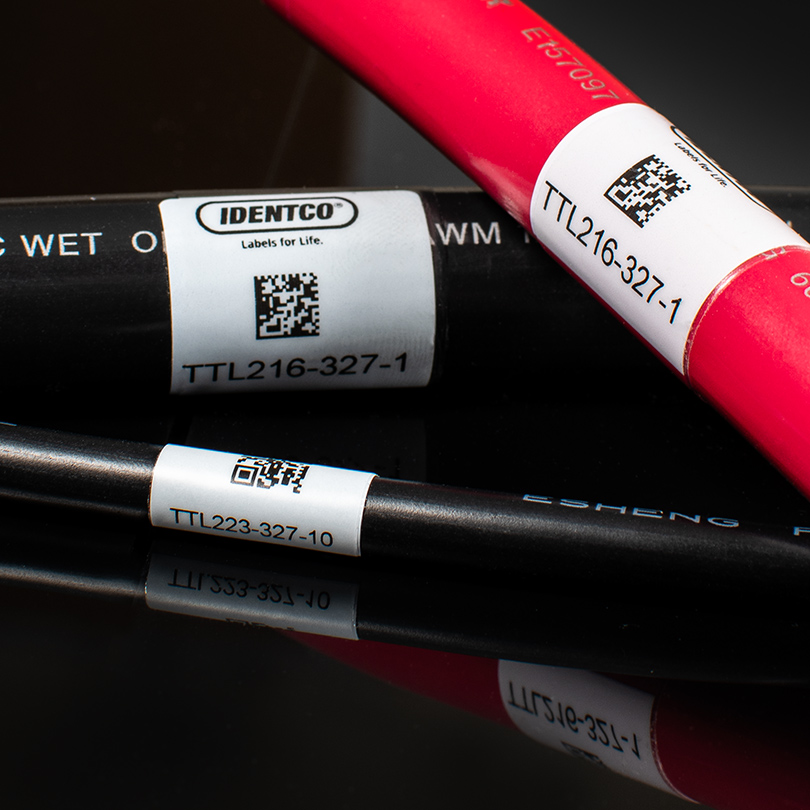
Armis brings this perspective to every solution, combining materials science expertise with application insight to ensure identification performs in the environments it serves. The result is a more resilient foundation for system performance, where accuracy, safety and uptime are built in – not left to chance.